I spent thirty-one years hauling freight cross-country. When you drive a big rig, you know your weight limits cold, because the scales on the interstate do not care about your schedule. You go over, you pay. The gate agent at the airport check-in counter works exactly the same way, except the fine hits you right in the wallet while fifty people watch from the queue behind you.
Since I retired from trucking and started traveling for pleasure, I have flown dozens of times. I have never paid an overweight bag fee once. Not because I travel light, but because I check before I leave the house. The tool I use is a digital luggage scale, and the process takes about ninety seconds. This guide walks you through the full system, step by step.
Your Bag Is Either Under the Limit or It Is Not. Find Out at Home.
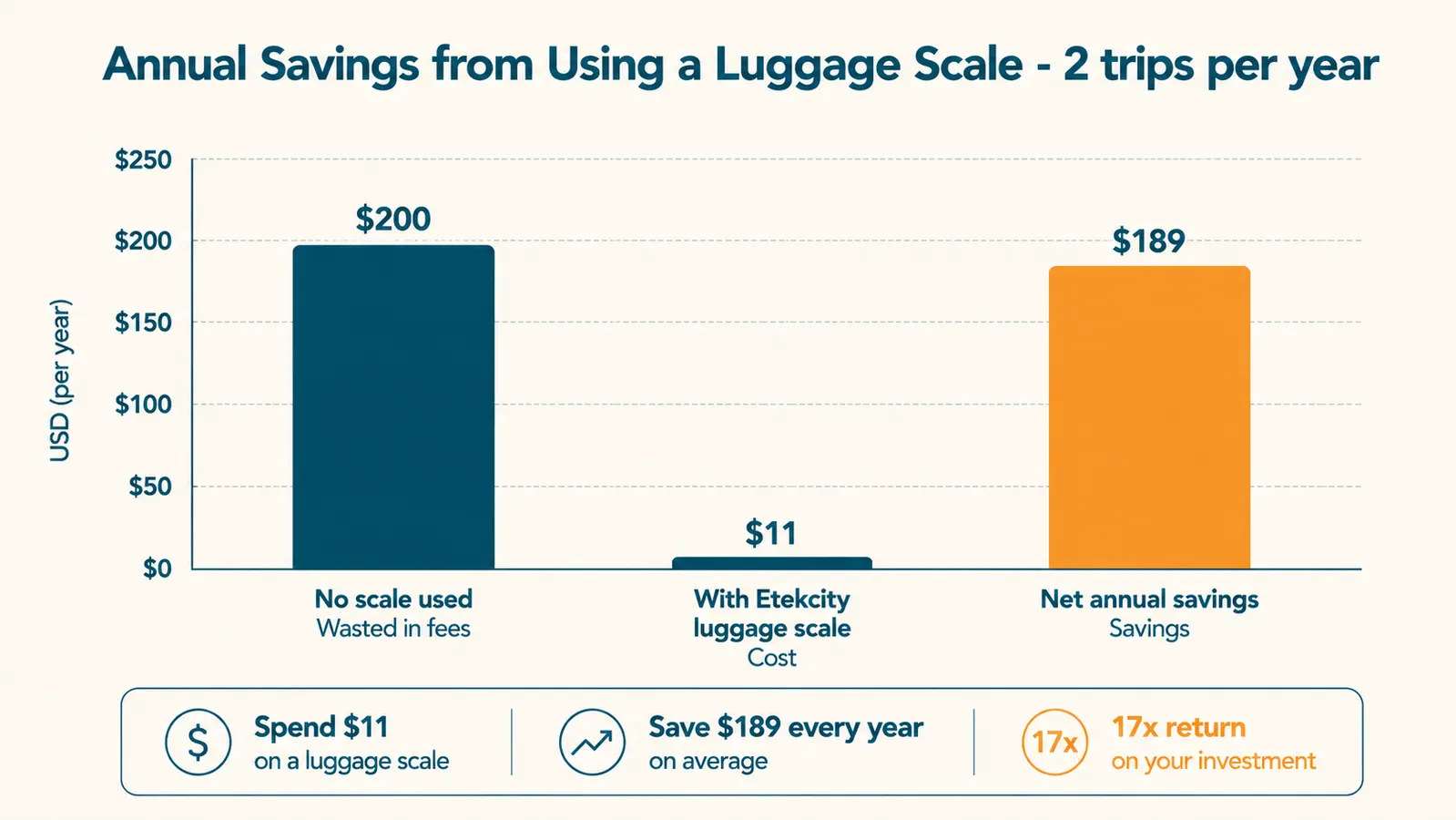
The Etekcity digital luggage scale reads up to 110 lbs and gives you a clear number in under three seconds. It has a 4.7-star rating across more than 70,000 reviews. At today's price, it costs less than a single overweight bag fee on any major carrier.
Amazon Check Today's Price on Amazon →Step 1: Know the Weight Limit for Your Specific Flight
This is the step most people skip, and it is the one that causes all the trouble. Most major US carriers, including American, Delta, United, Southwest, and Alaska, set their standard checked bag limit at 50 pounds for economy class. Go over by one pound and you are looking at an overweight fee that typically runs in the mid-to-high double digits each way. Go over 70 pounds and some airlines charge an additional tier on top of that.
International flights are where things get really complicated. European carriers like Lufthansa and British Airways often work in kilograms and the limits vary by route, fare class, and whether you booked directly or through a third party. I have seen the same flight on the same airline have different limits depending on the booking channel. Look up your exact itinerary on the airline's website before you even start packing. Write the number down and tape it to your suitcase zipper if you have to.
Budget carriers add another layer. Spirit, Frontier, and Allegiant charge for carry-ons AND checked bags, and their overweight thresholds can differ from the mainline carriers. If you are booking the cheapest fare you can find, take five extra minutes to read the full baggage policy before checkout. What looks like a bargain ticket can become significantly more expensive at the gate if your bag is over.
Step 2: Use a Baggage Scale Before You Leave the House
The single most effective thing you can do is weigh your bag at home, not guess. I cannot tell you how many people stand in the check-in line hoisting their bag and saying 'I think it is probably fine.' That is hope, not a plan. The bathroom scale method, where you weigh yourself holding the bag and subtract your own weight, works in a pinch but it is imprecise enough to get you in trouble when you are close to the limit.
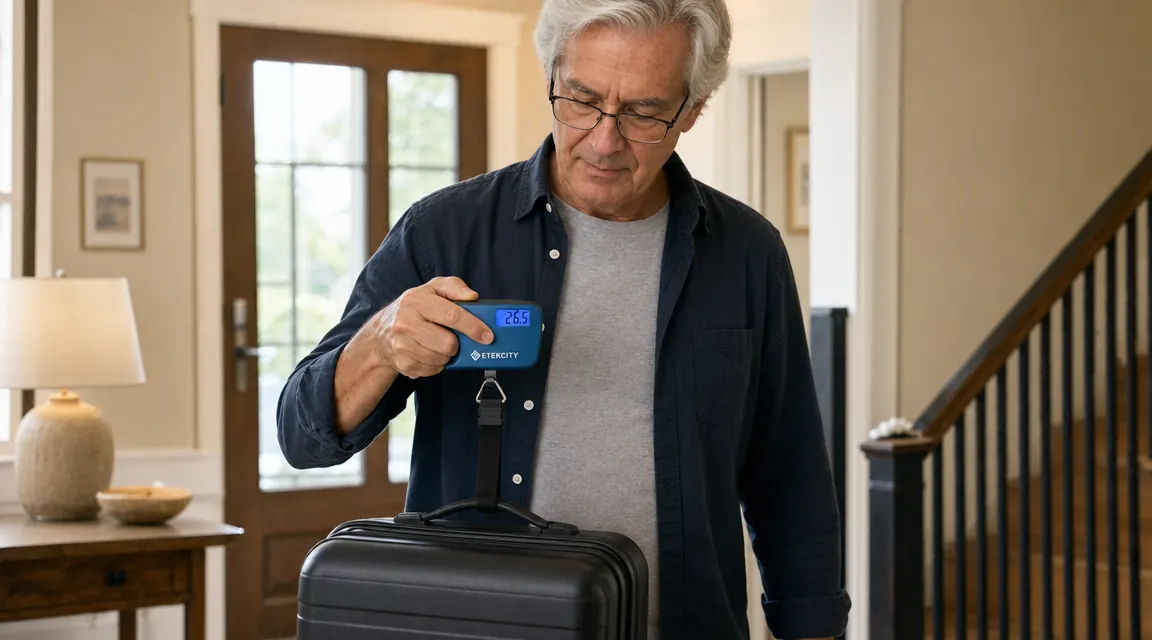
I use the Etekcity digital luggage scale. You loop the strap around the bag handle, lift straight up until the bag clears the floor, and hold still for about two seconds. The display locks and shows you the exact weight to a tenth of a pound. It reads up to 110 pounds, which covers any bag you could reasonably lift, and it has a temperature sensor built in, which I do not use often but appreciate on certain international routes. If the number is under your limit, you are done. If it is over, you fix it now, not at the counter.
The Etekcity runs on two AAA batteries and it fits in the mesh pocket of almost any suitcase. I have had mine for two years and the batteries have not died yet. The strap is wide nylon and has not shown any sign of wear, even after hanging heavier bags. It is not a complicated device, but it does its one job reliably every time, which is exactly what you want from a travel tool.
Step 3: Build a Packing List Sorted by Weight Priority
In trucking, we called it load planning. You know your gross weight allowance, so you figure out what is essential and what is extra before anything gets loaded. Packing a suitcase is no different. The problem most people have is they pack everything they might want, weigh the bag at the end, find it is over, and then start pulling things out in a panic. I flip that sequence.
I start with the heaviest non-negotiables: shoes, toiletry bag, any electronics. Shoes alone can run four to six pounds a pair. I lay them on the bathroom scale individually before they go in the bag, and I decide right there which pair stays home. Toiletries are another weight trap. Full-size shampoo, conditioner, and lotion bottles add up fast. I switched to travel-size bottles that I refill myself, and I shed about two pounds off every trip without changing what I bring.
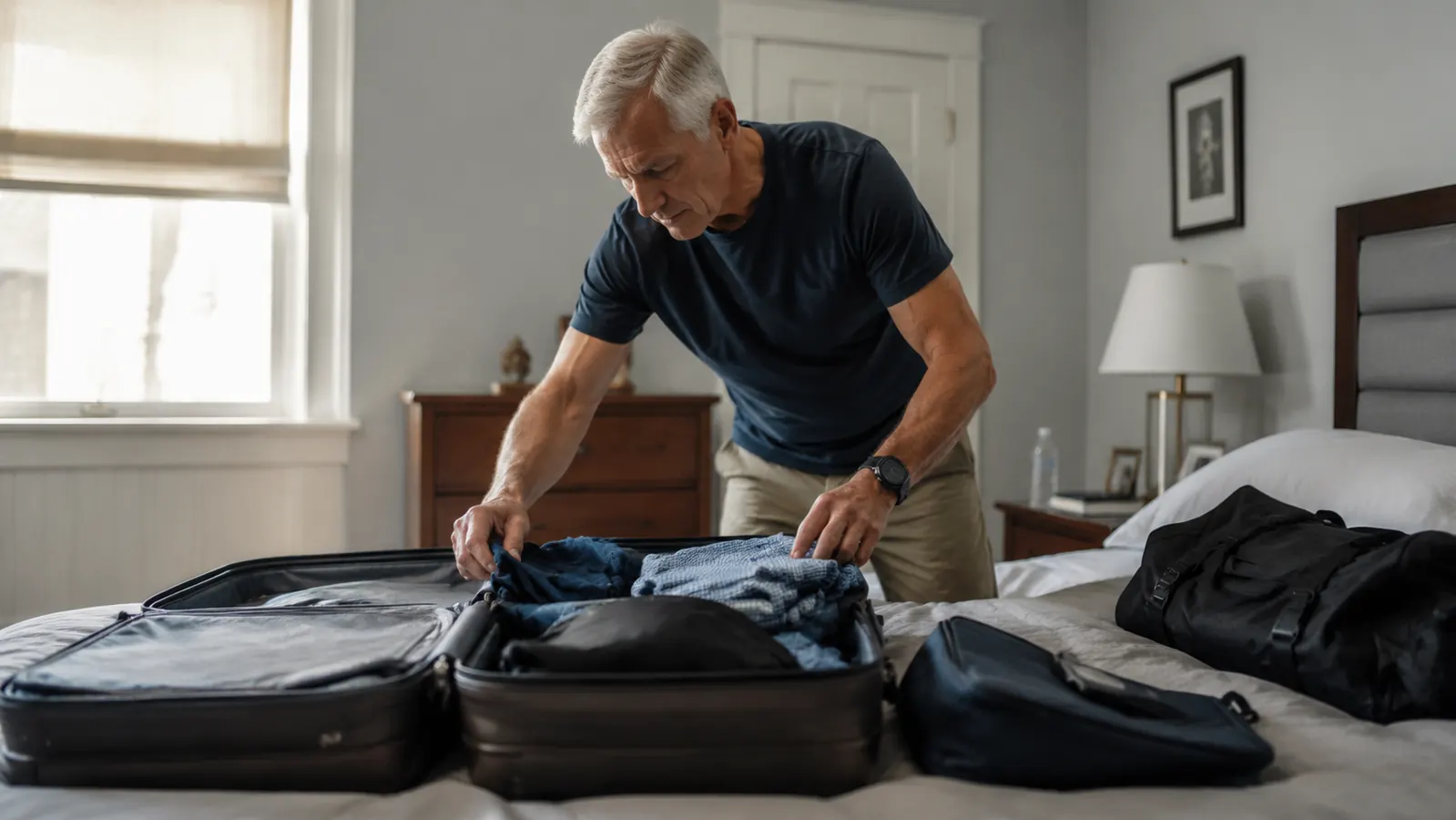
Clothes are lighter than people think, but they pack dense. I lay out everything I plan to bring, look at it honestly, and remove one outfit. That one outfit is almost always something I would have worn once, maybe. Rolled clothes compress better than folded clothes and tend to weigh the same, so I roll everything. By the time the bag is packed, I have a reasonable estimate in my head before I even lift the luggage scale.
Step 4: Weigh Again After Final Pack, Then Do a Buffer Check
I always do a second weigh-in after the bag is fully packed and zipped. The first weigh helps me plan. The second weigh is the confirmation. I pick up the Etekcity luggage scale, hook the bag, lift, and wait for the reading to lock. On a domestic trip with a 50-pound limit, I want to see 47 pounds or less. That three-pound buffer is not being timid. It is accounting for a bottle of local olive oil I might pick up, a souvenir that fits in my bag on the way home, or the fact that a different airport scale might read a few ounces heavier than mine.
If the scale reads 48.5 or 49, I go back in and swap something out. Usually it is the extra pair of shoes or the heavy book I told myself I would read. I never bring a book anymore. My phone has books on it and my phone weighs nothing extra. If you are regularly finding yourself at 48 or 49 pounds, that is a signal that your packing list needs a permanent trim, not just a last-minute shuffle.
Step 5: Handle the Return Trip Before You Leave the Hotel
Going home is where a lot of people get caught, because the bag is heavier than when they left. Souvenirs, a bottle of wine, clothes they washed and now pack wetter than expected, a jacket they bought because the weather surprised them. The luggage scale fixes this too, but only if you use it before you head to the airport, not when you arrive.
I weigh my bag at the hotel the morning of checkout. If I am over, I have three choices: wear the extra weight on the plane, ship something home via a flat-rate box from the local post office, or leave something behind. Shipping is often cheaper than the overweight fee and faster than you think if you use USPS Priority. Wearing a jacket, an extra shirt, and your heaviest shoes through the airport is not comfortable but it gets the bag under the limit without spending anything.
The key is having the information early enough to make a real decision. That is the whole point of the luggage scale. The baggage scale does not save you from overpacking, but it gives you the number in time to do something about it. Without it, you are guessing until you are standing at the check-in counter with no good options.
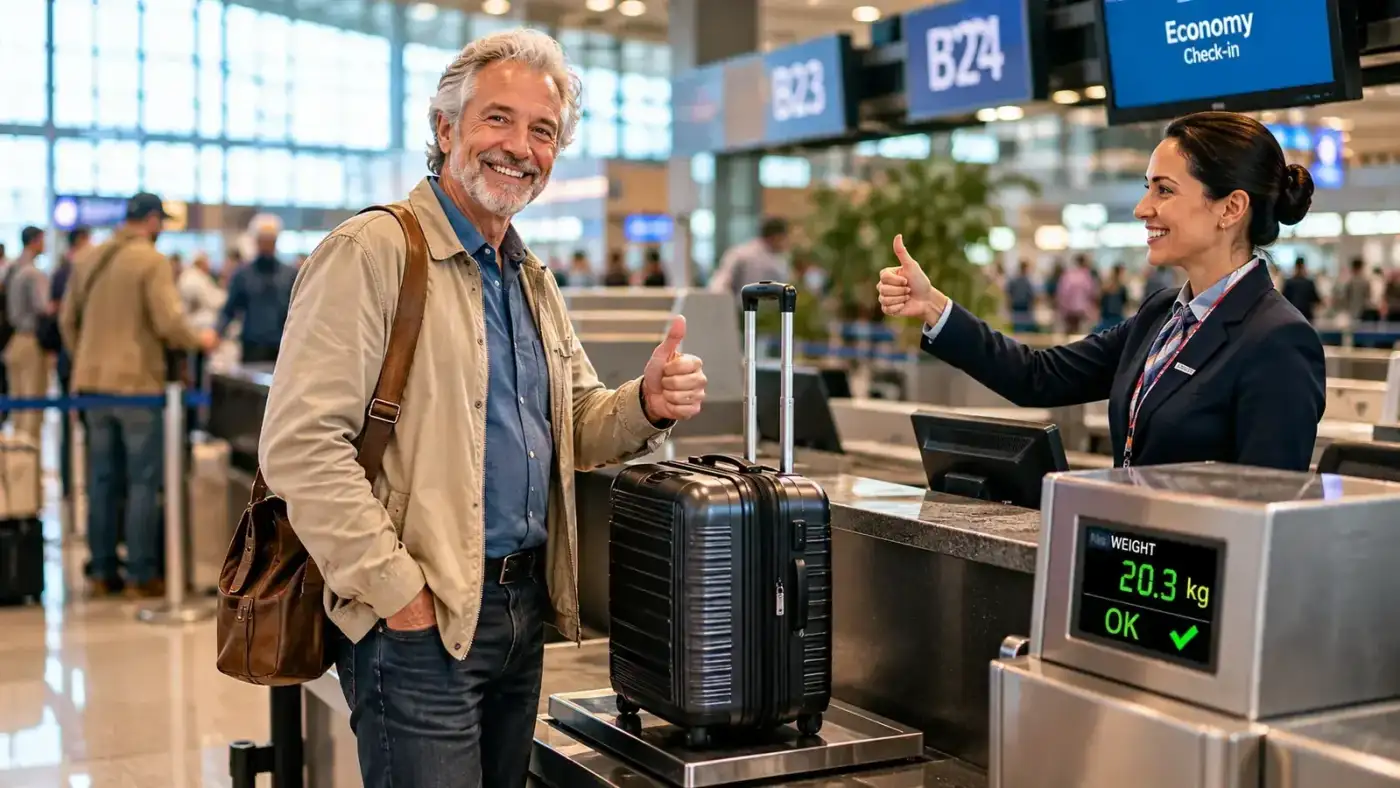
I never paid an overweight bag fee once. Not because I travel light, but because I check before I leave the house. The whole process takes ninety seconds.
What Else Helps
Beyond the five steps above, a few habits have made a real difference over the years. I keep a permanent packing list on my phone, divided by trip type: beach trip, cold-weather trip, business trip, international. Each list was built from a real trip I took and trimmed based on what I actually used. The list does not change unless I find something that works better or realize I have been hauling dead weight. Having a tested list means I never stand in front of my closet asking myself what I might need, which is how extra weight gets added.
Packing cubes help with compression and organization, but they do not save weight, despite what the packaging sometimes implies. What they do is make the bag more efficient to pack and easier to search, which means I am less likely to overpack out of anxiety. If everything has a designated cube, I know exactly what is in the bag and I stop second-guessing myself. That mental clarity is worth more than the few ounces the cubes themselves add.
If you fly the same airline regularly, sign up for their loyalty program even if you never accumulate enough miles for a free flight. Elite status, even at the lowest tier on many carriers, often includes one or two free checked bags, which eliminates the fee problem entirely for most trips. I fly mostly domestic on Southwest, where two checked bags are included in every fare, so the 50-pound limit is the only number I watch.
Ninety Seconds at Home Beats a Costly Surprise at the Counter
The Etekcity digital luggage scale is the simplest travel tool I carry. It weighs bags up to 110 pounds, fits in any suitcase pocket, and has lasted me two years on the same set of batteries. More than 70,000 travelers have given it a 4.7-star rating. Check today's price on Amazon.
Amazon Check Today's Price on Amazon →