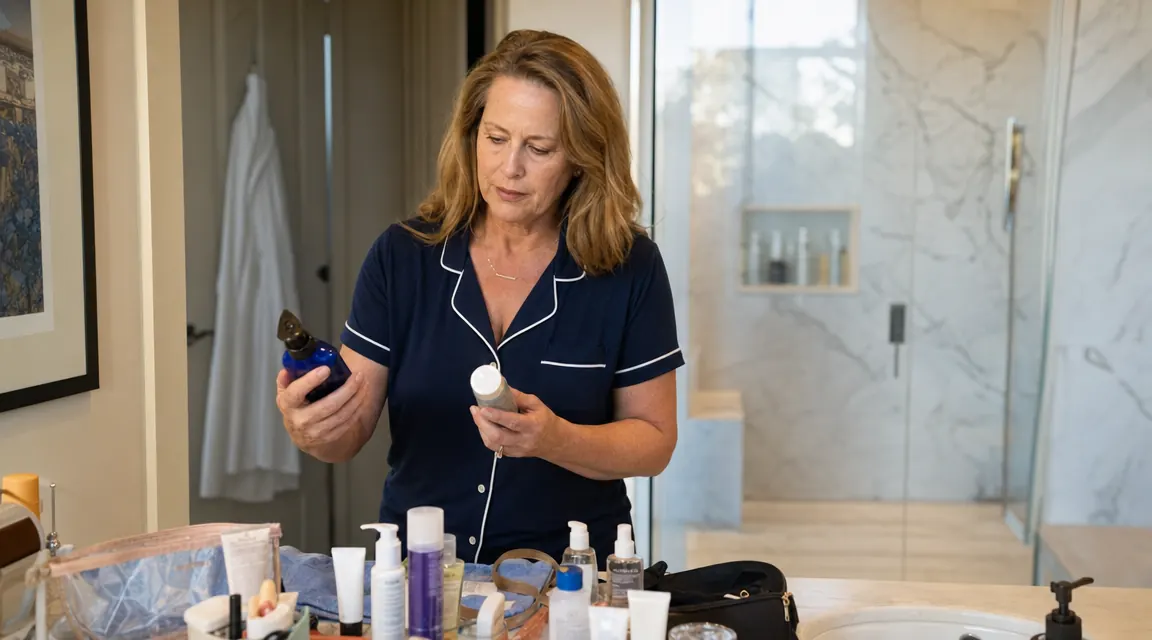
I drove an 18-wheeler for 27 years. Living out of a bag was just Tuesday for me. But the first time I walked into an airport and got pulled aside because my shampoo bottle was 4 ounces instead of 3.4, I felt like a complete fool. I had been hauling cargo across this country for nearly three decades and some rule I had never heard of almost made me throw away a bottle of Head and Shoulders at a security checkpoint in Charlotte. That was the day I got serious about learning how to pack toiletries the right way for carry-on travel.
The good news is this is not complicated once you know it. The TSA 3-1-1 rule has been the same since 2006, and the gear to work with it has gotten a lot better in the last few years. These days I travel carry-on only for trips up to 10 days, and my toiletries take up maybe a third of a quart-sized bag. I fill my Tocelffe silicone travel containers the night before a trip, drop them in my clear bag, and I am done. No checked bag fees, no waiting at baggage claim, no sweating out whether my full-size shampoo was going to make it through. Here is exactly how I do it.
Still checking bags because of full-size shampoo bottles? These TSA-approved travel bottles fix that today.
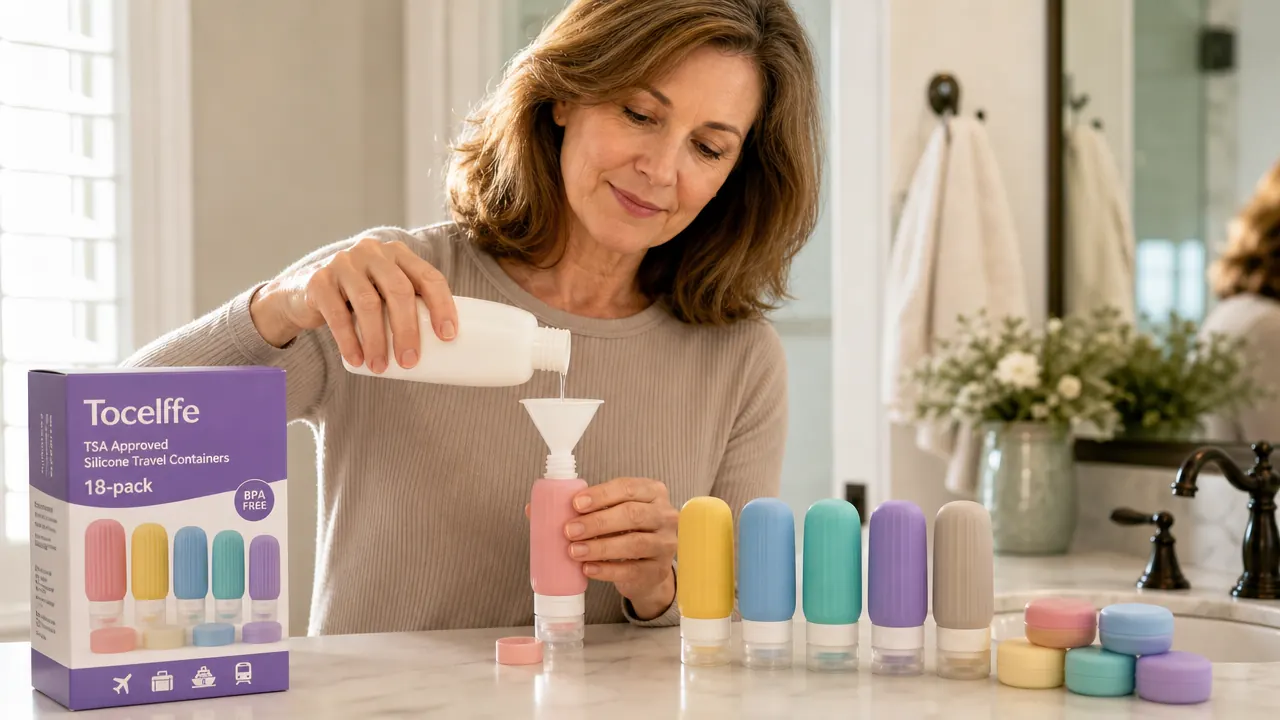
The Tocelffe 18-pack includes silicone squeeze bottles, disc-top bottles, and wide-mouth containers in multiple sizes. Rated 4.6 stars by over 11,000 travelers. They fit in a quart bag together with room to spare.
Amazon Check Today's Price on Amazon →Step 1: Understand the TSA 3-1-1 Rule Before You Pack a Single Bottle
The 3-1-1 rule breaks down like this: each liquid or gel container must hold 3.4 ounces (100 milliliters) or less. All of those containers must fit inside 1 clear, quart-sized zip-top bag. And you get 1 bag per person, placed in the security bin separately. That is it. That is the whole rule. The number that trips people up is the container size, not the total amount. You can carry a hundred 1-ounce bottles if they all fit in the quart bag. What you cannot do is carry one 4-ounce bottle, even if it is mostly empty.
The thing most travelers miss is that this applies to gels and creams too, not just liquids. Your toothpaste is a gel. Your face moisturizer is a cream. Your dry shampoo spray is an aerosol. All of it falls under the rule. The only things that get a pass are medications (which should be in original packaging) and formula or breast milk. Everything else needs to be in a container 3.4 ounces or smaller. Once that clicks, the whole system starts to make sense.
One more thing I learned the hard way: TSA officers measure by the printed size on the container, not what is actually in it. So a 6-ounce bottle that is half empty still gets confiscated. Do not try to argue it. Buy proper travel containers and transfer what you need. That is the only move that works every single time.
Step 2: Do a Full Toiletry Audit Before Buying Any Travel Bottles
Before you go buying a set of travel containers, dump out everything you currently take on trips and put it on the bathroom counter. Most people discover they are hauling three or four things they never even use. I found a bottle of conditioner in my old travel bag from a trip I had taken eight months earlier. Never used it once. It had just been riding along adding weight and taking up space.
Go through each item and ask yourself two questions. First: do I actually use this every day at home? Second: is it available for purchase at my destination if I truly need it? Shampoo, toothpaste, and bodywash you can find at any drugstore on earth. That expensive hair serum you use twice a week? That one might be worth packing. But the backup moisturizer, the second deodorant, the body scrub you use occasionally? Leave those at home.
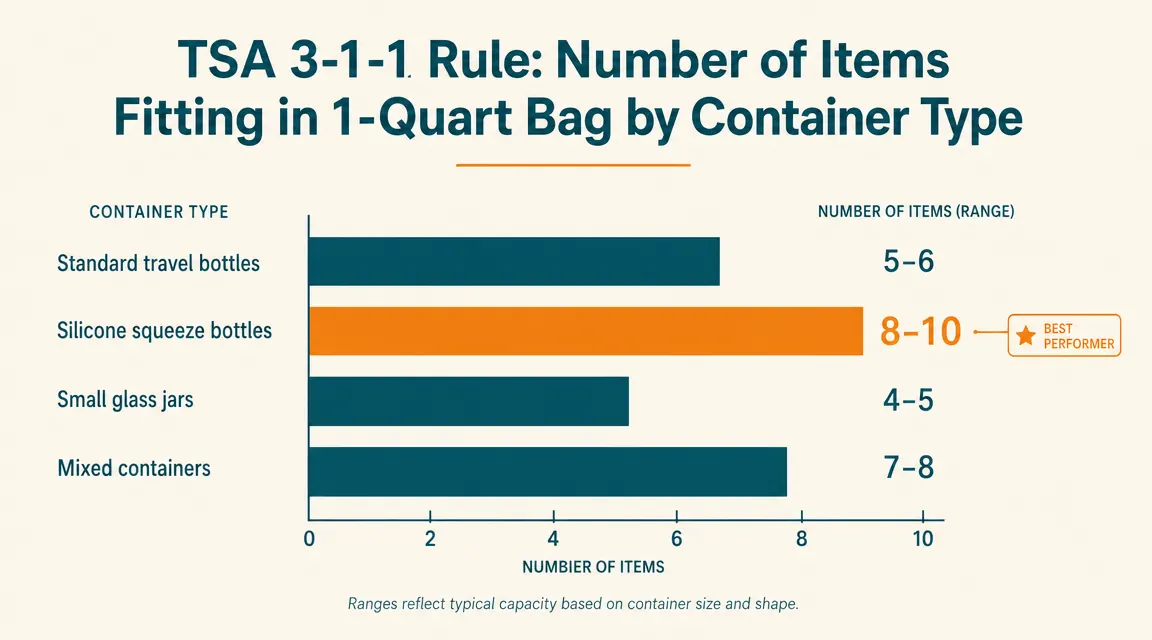
What you want to end up with is a list of 8 to 12 items, maximum. For most trips that is shampoo, conditioner, face wash, face moisturizer, body wash or bar soap, deodorant, toothpaste, and maybe one or two specialty items. That list will fit comfortably in a quart bag with room for a lip balm and a travel-sized cologne. If your list runs longer than 12, cut it in half. You will not miss the extras.
Step 3: Choose the Right Travel Bottles for Each Product
Not all travel containers work equally well for every product, and this is where a lot of people get themselves into trouble. They buy a set of identical squeeze bottles and then wonder why their thick conditioner comes out in one giant blob or why their toner leaks everywhere. Matching the right container type to the right product is what separates a smooth security experience from a quart bag full of leaky mess.
For thin liquids like toner, mouthwash, or cologne, a small disc-top bottle with a flip cap works better than a squeeze bottle because you can control the amount more precisely. For thick products like shampoo, conditioner, or face wash, a soft silicone squeeze bottle is the right call. The Tocelffe 18-pack covers both categories, which is why I switched to it after going through three different single-type sets that each had a blind spot. The 18-piece set includes 2-ounce squeeze bottles, disc-top bottles, and a couple of wider-mouth jars for solid balms or thick creams.
For solid products like bar soap, deodorant bars, or solid shampoo, you do not need a liquid container at all. Solid versions of your favorite products are worth looking into if you travel frequently. They are not subject to the 3-1-1 rule at all, which means one less item taking up quart-bag space. I switched to solid shampoo bar on long trips and it freed up space for two extra items I actually wanted.
Matching the right container to the right product is what separates a smooth security line from a quart bag full of mess. A good set of travel bottles, the Tocelffe 18-pack being the one I trust, covers thin liquids, thick creams, and wide-mouth jars all in one box.
Step 4: Fill and Label Your Travel Containers the Night Before You Fly
Morning-of packing is how things get missed or overfilled. I learned that on a 4 a.m. departure out of Orlando where I filled my shampoo bottle too fast, did not seal it properly, and ended up with half my quart bag coated in a thin film of Pert Plus by the time I landed in Denver. Fill your travel bottles the night before, while you have good light and a steady hand, and do it over the sink so any drips do not end up on your clothes.
When you fill the bottles, do not go all the way to the top. Leave a little air space, about 10 to 15 percent of the volume. Pressure changes in the cabin of a plane can cause bottles to swell slightly, and a bottle that was sealed perfectly at sea level might leak a little at 35,000 feet if it had zero room to expand. This is especially important for anything in a disc-top bottle where the cap is under more stress than a simple screw top.
On labeling: a small strip of white medical tape with a marker does the job fine. You do not need anything fancy. Just label each bottle with a single word so your travel partner or anyone going through your bag at security does not mistake your face toner for your contact lens solution. I have been doing this for five years and have never mixed them up. Before I started labeling, I mixed them up twice.
Step 5: Pack Your Quart Bag for Easy Security Access
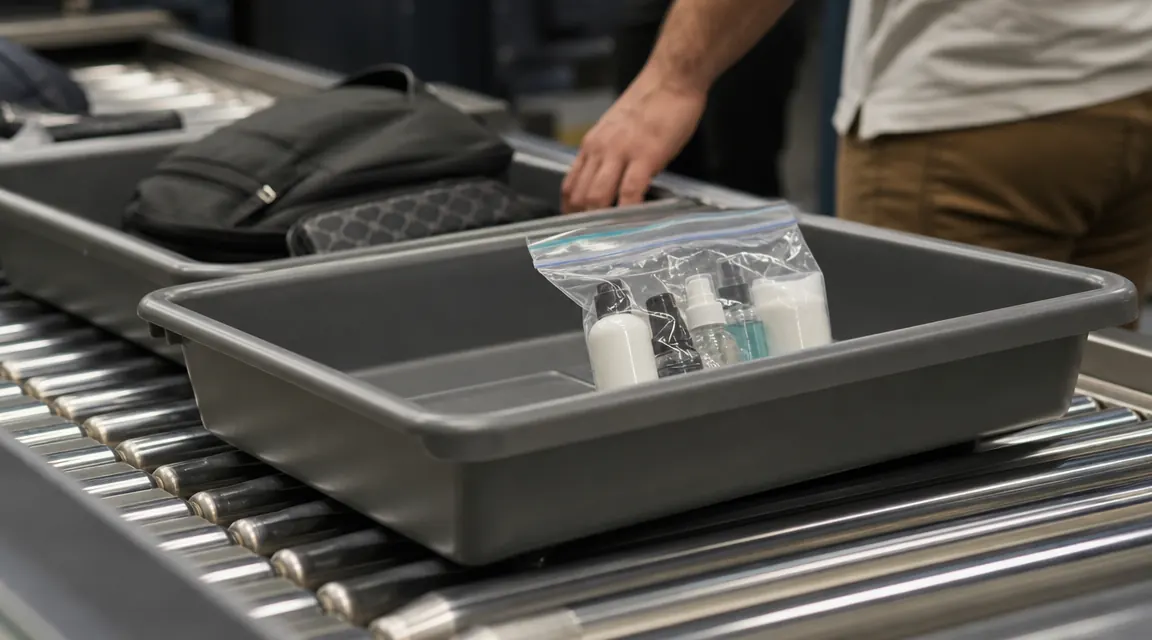
Where your quart bag lives in your carry-on matters. The single most common mistake I see at security checkpoints is people who have buried their toiletries bag deep in their carry-on and then hold up the whole line trying to dig it out. TSA requires you to remove the quart bag and put it in its own bin. If it takes you more than 10 seconds to pull it out, you packed wrong.
Put your quart bag in an outside pocket of your carry-on, or at the very top of the main compartment, facing up. Some travelers prefer a dedicated toiletries pouch that sits in a specific pocket of their bag so they always know where it is without thinking. That works great too. The key is that you can pull it out with one motion while the line is moving. A quart bag that requires unpacking half the bag to access is a quart bag packed incorrectly.
One practical note on the quart bag itself: standard gallon-sized freezer bags are too big. Standard sandwich bags are too small. You need a quart-sized zip-top bag specifically. The TSA guidelines say quart-sized, and agents do look at that. I keep a small supply of quart zip bags at home just for travel and I replace them every couple of trips because the zippers wear out. You can also buy reusable silicone quart bags that last for years, which is the more practical long-term move.
What Else Helps With Carry-On Toiletry Packing
Beyond the travel bottles and the quart bag, a few other habits make carry-on toiletry packing easier over time. First, keep a dedicated travel toiletries kit that stays packed between trips. I have a small zippered bag that lives in my closet with an extra toothbrush, a travel-sized toothpaste, and a few of my travel bottles pre-filled with the basics. When a trip comes up, I add my quart bag, check what needs refilling, and I am ready in ten minutes instead of an hour.
Second, consider what you can buy at your destination versus what you actually need to bring. For a three-night domestic trip, I bring only what I cannot easily replace: my specific face wash, my prescription skincare, and whatever I would have to hunt for in an unfamiliar city. Everything else I either buy at a drugstore when I land or use from the hotel. For international trips I bring more because the brands I trust are harder to find, but the discipline of asking what I actually need still applies.
Third, after every trip, take five minutes to refill or replace whatever ran low while you were traveling. Doing it right after you get home means your travel bottles are ready to go for the next trip. Doing it the morning of departure means rushing, overfilling, and the kind of mistakes that end up smelling like lavender body wash in your laptop bag. A little maintenance goes a long way.
Your quart bag should never be the reason you miss a flight or check a bag.
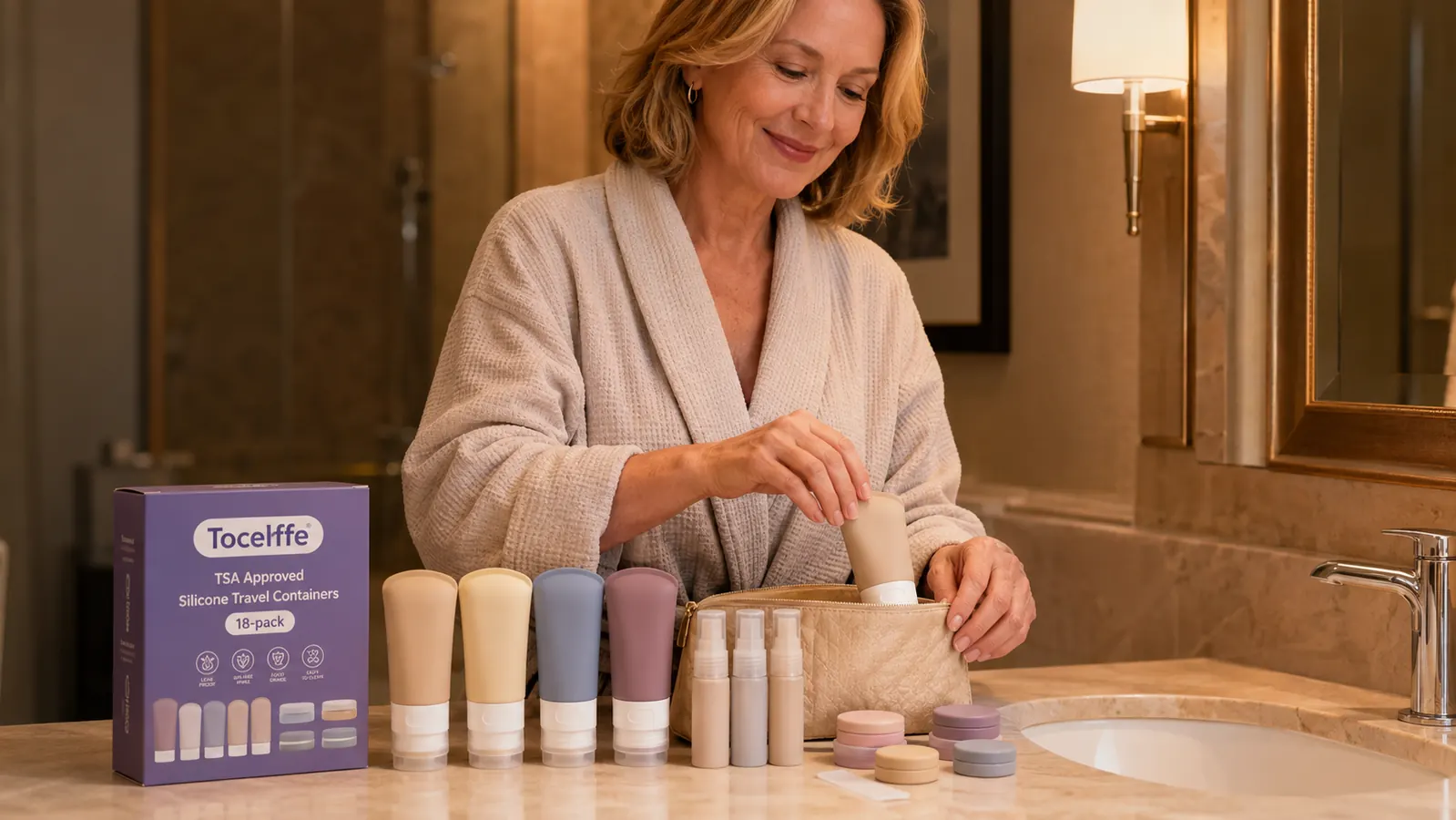
The Tocelffe 18-pack TSA travel containers are what I use on every trip. They cover every product type, seal tight, and the whole set fits in a quart bag with space left over. Over 11,000 reviews on Amazon. Current price is in the budget range.
Amazon Check Today's Price on Amazon →